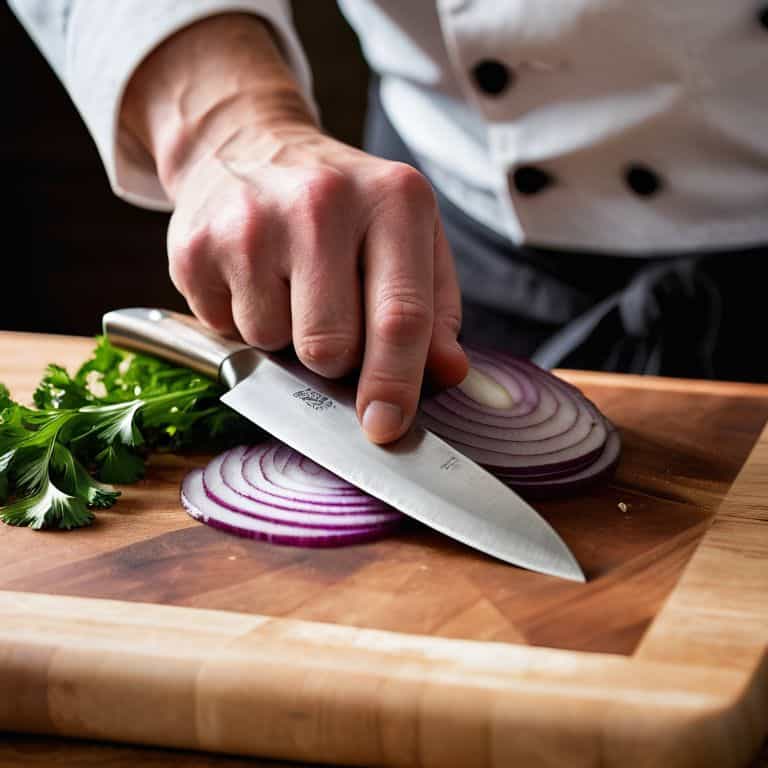
I still remember the first time I tried to chop an onion – it was a disaster! I had heard that mastering basic knife skills for home cooks was all about having the right tools and following some vague guidelines, but I quickly learned that it’s so much more than that. The truth is, most of us have been taught to believe that knife work is an innate talent, something you either have or you don’t. But I’m here to tell you that’s just not true – with the right approach, anyone can become a knife-wielding rockstar.
In this article, I’ll share my favorite tips and tricks for mastering the fundamentals of knife work, from choosing the right knife to slicing, dicing, and mincing like a pro. You’ll get practical advice on how to hold your knife, how to maintain its edge, and how to tackle even the toughest ingredients with confidence. By the end of this guide, you’ll be equipped with the skills and knowledge to take your cooking to the next level, and you’ll never look at a kitchen knife the same way again. So, let’s get started and unlock the secret to effortless knife work in the kitchen!
Table of Contents
- Guide Overview: What You'll Need
- Step-by-Step Instructions
- Basic Knife Skills for Home Cooks
- Knife Skills 101: 5 Essential Tips to Get You Cooking Like a Pro
- Key Takeaways for Mastering Basic Knife Skills
- Knife Skills Wisdom
- Mastering the Art of Knife Work: A Culinary Journey
- Frequently Asked Questions
Guide Overview: What You'll Need
Total Time: 1 hour 15 minutes
Estimated Cost: $10 – $20
Difficulty Level: Easy
Tools Required
- Chef’s Knife (8 inches long)
- Cutting Board (at least 12 inches by 18 inches)
Supplies & Materials
- Fresh Vegetables (for practice)
- Fruits (for practice)
Step-by-Step Instructions
- 1. First, let’s start with the basics: understanding your knife. It’s essential to get familiar with the different parts of your knife, including the blade, handle, and tip. Take a few minutes to hold your knife correctly, with a firm but not overly tight grip, and get a feel for its balance and weight.
- 2. Next, we’re going to practice the proper stance: stand with your feet shoulder-width apart, with one foot slightly in front of the other, and keep your dominant hand holding the knife. This stance will help you maintain balance and control while chopping, slicing, or dicing ingredients.
- 3. Now, let’s move on to the fundamental chopping motion. To do this, place the ingredient you want to chop on a stable cutting board, and hold your knife at a 45-degree angle. Bring the knife down in a smooth, gentle motion, using your wrist and forearm to generate power, and apply gentle pressure as you chop.
- 4. The rocking motion is another essential technique to master. This motion involves moving the knife back and forth while keeping the tip on the cutting board. To practice this, place a vegetable like a carrot or bell pepper on the board, and hold your knife at a 20-degree angle. Then, use a gentle rocking motion to slice the ingredient into thin strips.
- 5. It’s time to learn how to dice like a pro. To dice an ingredient, cut it into thin slices, then stack the slices on top of each other and cut them into small cubes. Remember to keep your knife sharp, as a dull knife can be dangerous and make the dicing process much more difficult.
- 6. Now that you’ve mastered the basics, let’s talk about knife safety. Always cut away from your body, and keep your fingers curled under and out of the way of the blade. It’s also essential to store your knife properly, in a dry place, away from children and pets.
- 7. Finally, let’s practice mincing, which involves cutting ingredients into very small pieces. To mince an ingredient, place it on the cutting board and hold your knife at a 45-degree angle. Then, use a gentle pressing motion to chop the ingredient into small pieces, moving the knife from one end of the ingredient to the other.
Basic Knife Skills for Home Cooks
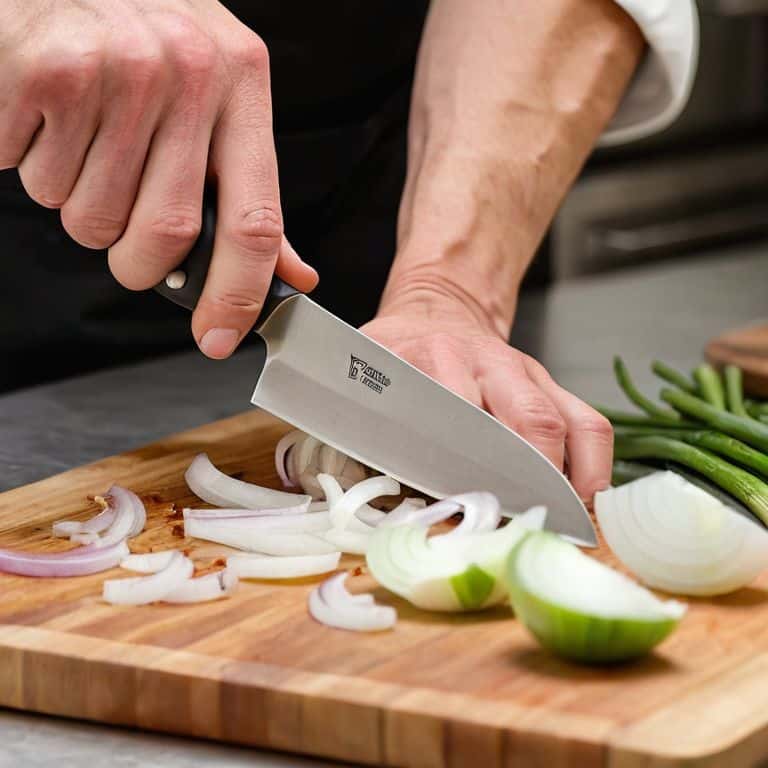
As you continue to hone your knife skills, it’s essential to understand the essential knife cuts for beginners, such as the chop, slice, and dice. Mastering these cuts will help you prepare ingredients efficiently and safely. Remember, the key to improving your knife handling and dexterity is to practice regularly and focus on proper grip and stance.
When working with different ingredients, it’s crucial to adjust your knife skills accordingly. For instance, cutting through meat requires a different technique than cutting through vegetables. Knife sharpening techniques at home can also make a significant difference in your cutting experience. A sharp knife is not only safer but also more effective, allowing you to cut through ingredients with ease.
To take your knife skills to the next level, consider investing in a good knife sharpener and learning about proper knife storage and maintenance. This will help prevent common knife injuries and ensure your knives remain in good condition. By following these tips and practicing regularly, you’ll become more confident and proficient in the kitchen, and cooking will become a more enjoyable experience.
Essential Cuts for Beginners
Now that we’ve covered the basics, let’s dive into the essential cuts that every beginner should master. I like to call them the “holy trinity” of knife cuts: chop, slice, and dice. These three cuts will get you through most recipes and are the foundation upon which more complex cuts are built.
To start, practice chopping fresh herbs like parsley or cilantro – it’s a great way to get a feel for the weight and balance of your knife. Next, try slicing a cucumber or carrot into thin, even rounds. Finally, dice a bell pepper into small, uniform cubes. Remember, the key to mastering these cuts is to take your time and focus on making smooth, controlled motions. With a little practice, you’ll be chopping, slicing, and dicing like a pro in no time!
Sharpening Secrets at Home
To take your knife skills to the next level, you need to keep your blades sharp. Sharpening at home is easier than you think, and it’s a total game-changer. I’m excited to share my favorite sharpening secrets with you! Start by choosing the right sharpening tool – I recommend a whetstone or a sharpening steel. With a little practice, you’ll be able to hone your knives to a razor-sharp edge.
Remember, sharpening is all about maintaining the right angle and using gentle, smooth strokes. Don’t be discouraged if it takes a few tries to get the hang of it – with patience and practice, you’ll be sharpening like a pro in no time. A sharp knife is not only safer, but it also makes cooking so much more enjoyable. Give it a try and see the difference for yourself!
Knife Skills 101: 5 Essential Tips to Get You Cooking Like a Pro
- Choose the right knife for the job – a sharp, quality chef’s knife is your new best friend in the kitchen
- Master the pinch grip: hold your knife with a firm, but not overly tight, grip to maintain control and precision
- Keep your knives sharp: a dull knife is a safety hazard and a recipe for disaster, so learn to sharpen at home or invest in a good sharpener
- Practice your cuts: from chopping and slicing to dicing and mincing, repetition is key to developing muscle memory and speed
- Stay safe and focused: always cut away from your body, keep your fingers curled under, and maintain a clean, clutter-free workspace to avoid accidents and stress
Key Takeaways for Mastering Basic Knife Skills
With practice, you’ll be able to chop, slice, and dice ingredients like a pro, making meal prep a breeze
Sharpening your knives at home is easier than you think, and it will make a huge difference in your cooking experience
Mastering essential cuts and techniques will give you the confidence to tackle any recipe and experiment with new flavors and ingredients
Knife Skills Wisdom
Mastering basic knife skills is not just about chopping veggies, it’s about unlocking a world of culinary confidence – where every slice, dice, and mince is a declaration of deliciousness to come!
Sophie Wallace
Mastering the Art of Knife Work: A Culinary Journey
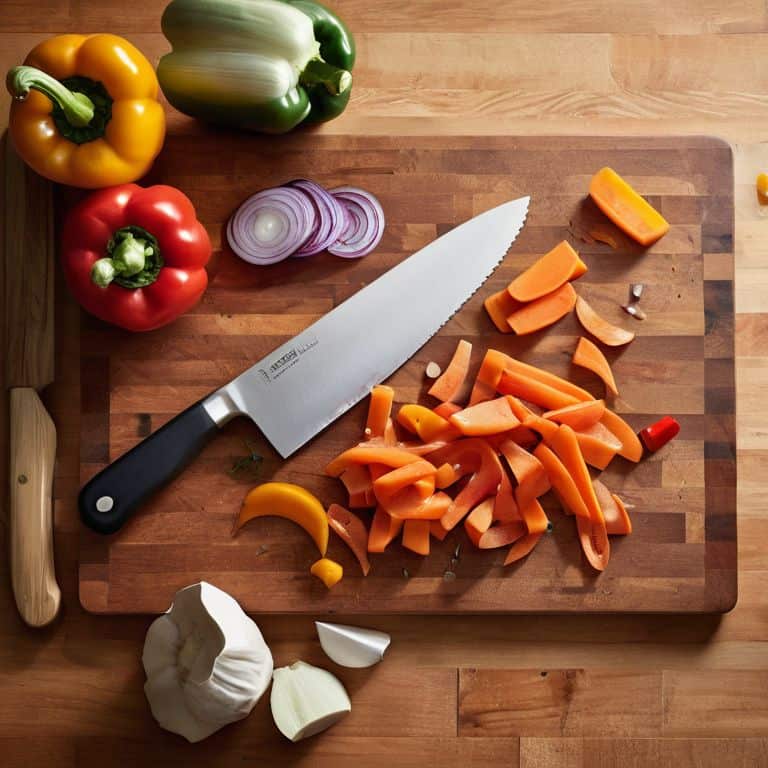
As we conclude our journey through the world of basic knife skills, let’s take a moment to recap the essential takeaways. We’ve explored the fundamental cuts that every home cook should know, from chopping and slicing to dicing and mincing. We’ve also delved into the sharpening secrets that will keep your knives in top condition, ensuring you can tackle even the toughest ingredients with ease. By mastering these skills, you’ll be well on your way to becoming a confident and efficient home cook, capable of tackling a wide range of recipes with precision and flair.
So, what’s next on your culinary journey? Remember, the key to effortless knife work is practice, patience, and a willingness to learn. Don’t be afraid to experiment with new techniques, try out different knife styles, and push yourself to improve with each passing day. As you continue to hone your skills, you’ll find that cooking becomes not just a chore, but a labor of love, a creative outlet that brings joy and nourishment to yourself and those around you. Happy cooking!
Frequently Asked Questions
What are the most common mistakes to avoid when handling a knife in the kitchen?
Don’t worry, we’ve all been there! Common knife-handling mistakes include applying too much pressure, slicing towards your body, and not keeping your fingers curled under. Remember, gentle grip, slice away from you, and tuck those fingers in – practice makes perfect, and I’m rooting for you!
How often should I sharpen my knives to maintain their effectiveness?
Sharpening frequency depends on usage, but as a rule of thumb, I sharpen my knives every 1-3 months or when I notice a slight decline in performance. For home cooks, a quick touch-up every 1-2 weeks can also work wonders in maintaining those razor-sharp edges.
Are there any specific knife skills that are essential for preparing common ingredients like onions, garlic, and bell peppers?
Absolutely, mastering a few key cuts can make a huge difference. For onions, garlic, and bell peppers, focus on the chop, mince, and julienne cuts. These will help you prep for a variety of dishes, from stir-fries to sauces. I’ll break down each cut into simple, easy-to-follow steps, so you can confidently chop your way to culinary success!