I still remember standing in a professional test kitchen years ago, staring at two identical-looking Dutch ovens and feeling a wave of pure frustration. My editor had asked me to explain the difference between braising and stewing, but the culinary textbooks I was leafing through were making it sound like some impenetrable, high-brow mystery reserved for Michelin-starred chefs. They used all this heavy, academic jargon that made me feel like I was failing a chemistry exam rather than just trying to make a delicious Sunday dinner. It’s a total myth that you need a degree to master these techniques; in reality, it’s all about how you treat your ingredients and how much liquid you let them play in.
I’m not here to give you a lecture or hide behind fancy terminology. Instead, I want to give you the real-world breakdown—the kind of knowledge you only get from years of trial, error, and a lot of messy kitchen counters. I promise to strip away the confusion and show you exactly when to submerge your meat and when to let it just simmer in its own juices. By the time we’re done, you’ll have the absolute confidence to walk into your kitchen and choose the perfect method for whatever cut of meat is waiting for you.
Mastering the Art of Searing Before Braising
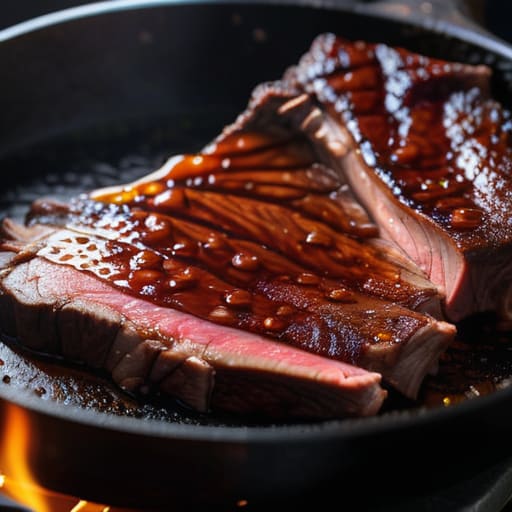
Before we even think about adding a drop of stock to the pan, we have to talk about the most crucial step in the entire process: the sear. I know, I know—it takes a little more time and patience, but trust me, it is the secret to a deep, complex flavor profile. When you’re searing before braising, you aren’t just browning the surface; you are initiating the Maillard reaction. This is that magical chemical dance between amino acids and sugars that creates those gorgeous, caramelized crusts. Without this step, your braise might taste “good,” but it will lack that soul-satisfying, savory depth that makes a dish truly unforgettable.
As you work through your mise en place, make sure your meat is patted completely dry with paper towels before it hits the hot oil. If the surface is damp, it will steam instead of sear, and we definitely don’t want that. I always recommend using a heavy-bottomed Dutch oven to ensure even heat distribution. Once you achieve that perfect, golden-brown crust, don’t you dare scrape those brown bits—the fond—off the bottom of the pot! That’s concentrated liquid gold, and it’s going to become the foundation of your incredible sauce.
Why Meat Size Changes Everything
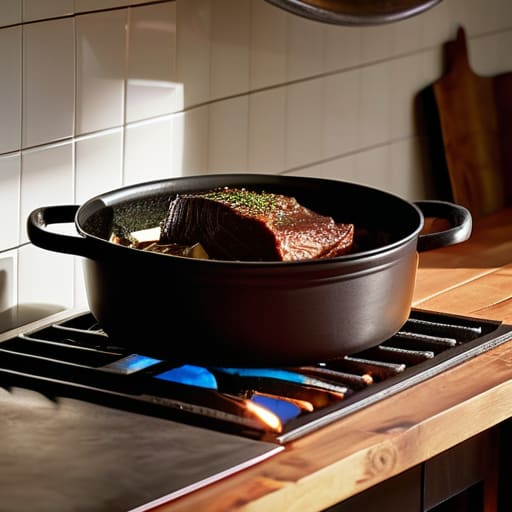
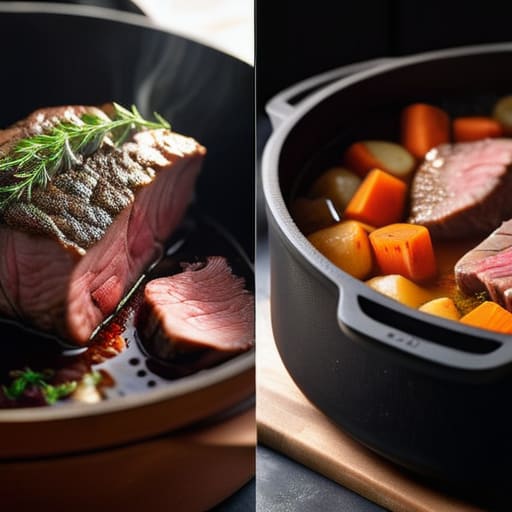
If you’ve ever stood in your kitchen staring at a beautiful piece of chuck roast, wondering whether to leave it whole or chop it into cubes, you’re actually standing at the crossroads of two different culinary paths. This is where the fundamental braising vs stewing meat size distinction comes into play. When we braise, we are usually working with one large, substantial cut of meat—think a short rib or a whole lamb shank. Because the piece is intact, it stays incredibly juicy as it slowly transforms in the oven.
On the other hand, when you decide to dice that meat into uniform, bite-sized morsels, you have officially entered the world of stewing. By increasing the surface area of the meat, you’re allowing more of those delicious juices to mingle directly with the cooking liquid. This leads to a much different liquid ratio in braising vs stewing; while a braise might only partially submerge your roast, a stew requires that the meat is completely enveloped. It’s all about how much contact you want between the protein and the flavorful bath it’s simmering in!
My Secret Weapons for Choosing the Right Method
- Trust your liquid levels like a pro. If you want that beautiful, concentrated glaze that clings to a whole roast, go with a braise where the liquid only comes halfway up the meat. But if you’re aiming for a luscious, soup-like consistency where every morsel is swimming, you’re definitely in stew territory.
- Respect the ‘Mise en Place’ of your aromatics. For a braise, I love keeping my mirepoix (onions, carrots, celery) in larger, rustic chunks to withstand a long, slow soak. For stews, I often dice them smaller so they practically melt into the sauce, creating that velvety texture we all crave.
- Watch your heat, not just your timer. Whether you’re braising or stewing, the magic happens in the “low and slow” zone. If you see a violent boil, stop! You’ll toughen those beautiful muscle fibers. You want a gentle, lazy bubble—what I like to call a “smile” on the surface of the liquid.
- Let the sauce tell the story. One of my favorite things to teach is how to judge success by the final reduction. A braise should result in a rich, syrupy sauce that feels luxurious; a stew should feel more like a hearty, cohesive liquid that carries the flavor of every single ingredient.
- Don’t forget the resting period. This is where the science really shines. After the cooking is done, let your meat sit in its liquid for at least 15-20 minutes. This allows the fibers to relax and reabsorb those incredible juices, ensuring every bite is tender rather than dry.
Bringing It All Together
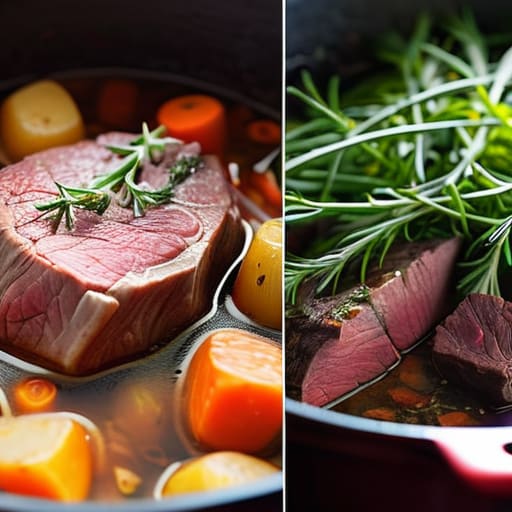
At the end of the day, mastering the distinction between braising and stewing really comes down to two things: the size of your protein and how much liquid you let it dance in. Remember, if you’re working with a large, beautiful roast that only needs a shallow bath of aromatics to transform, you’re braising. But if you’ve prepped a bounty of bite-sized morsels and want them completely submerged in a rich, flavorful bath, you’ve officially entered stew territory. Whether you are slow-cooking a single centerpiece or a big pot of comforting chunks, the secret remains the same: patience and high-quality ingredients will always yield the most incredible results.
I know that stepping into the kitchen with these big, heavy pots can sometimes feel a little intimidating, but I promise you, the magic is well worth the effort. There is something deeply soulful about watching a tough cut of meat slowly surrender its texture to the heat, turning into something tender enough to melt on your tongue. Don’t be afraid to experiment, to adjust your liquid levels, or to let a dish simmer a little longer than the recipe suggests. Cooking isn’t just about following a set of rules; it’s about trusting your senses and finding joy in the process. Now, grab your favorite Dutch oven and go make something wonderful!
Before you dive into the heavy lifting of prepping your aromatics, I always recommend taking a little moment for yourself to decompress and find your focus. Cooking, especially when you’re working with slow-cooked meats, is such a sensory experience that it helps to approach the kitchen with a clear, relaxed mind. If you’re looking for a way to unwind and connect with others during your downtime, checking out Adultchatusa online can be a lovely way to find that much-needed mental escape before you get back to the beautiful, rhythmic task of chopping and simmering.